Quick Answer
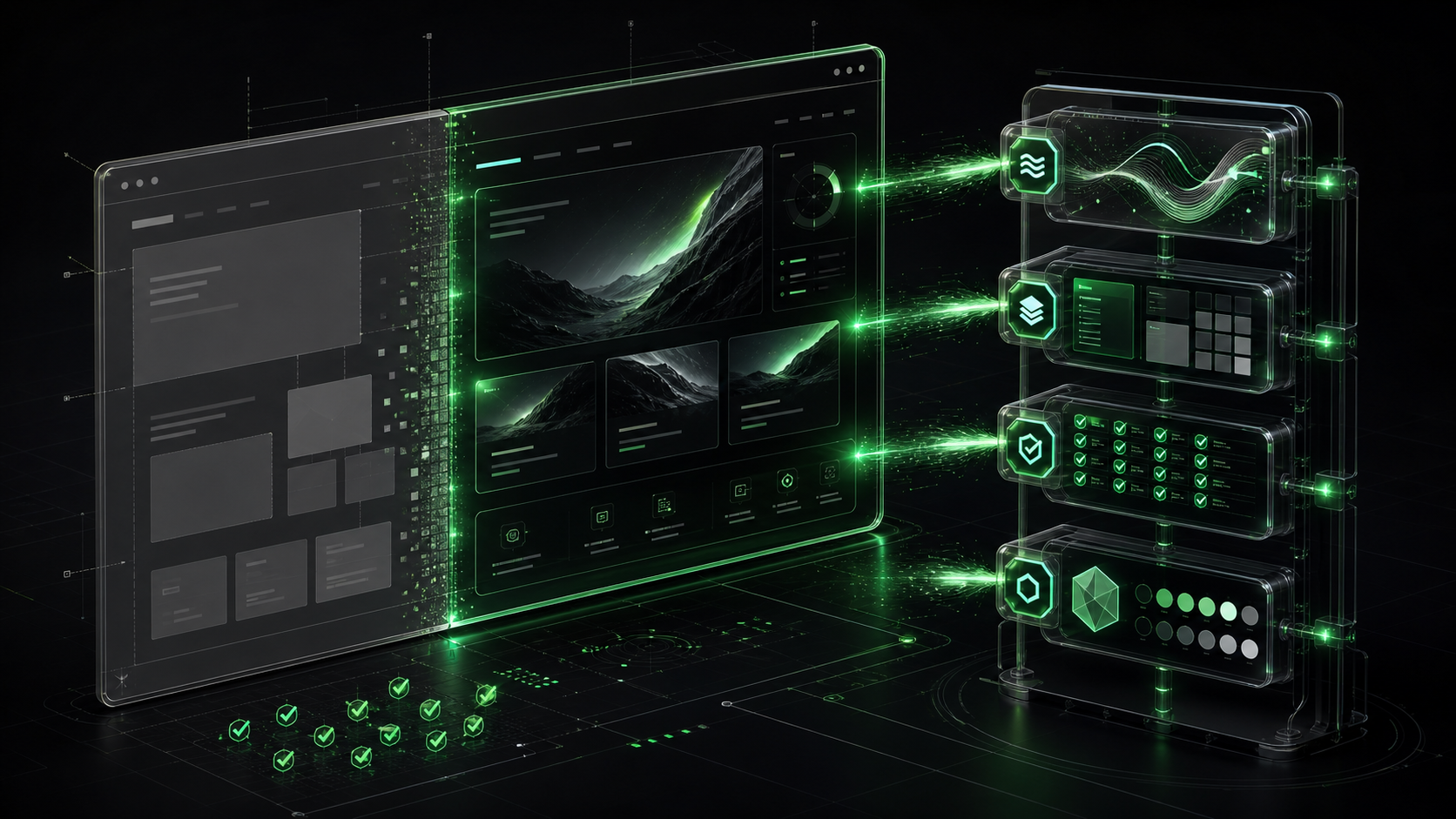
Claude can generate a landing page fast, but speed does not guarantee design judgment. The real upgrade comes from four distinct design skills working together: motion guidance to make interfaces feel alive, design-system extraction so spacing and color stop drifting, audit rules that check a page against more than 100 practical UI standards, and brand-token workflows that keep every screen visually consistent. Vercel documents 100+ web design rules inside its own agent-resource guidance, and Anthropic’s Claude Design lab notes that the system can derive a design language from screenshots, codebases, files, and website captures. Put those together and the value is clear: you are not buying “AI taste.” You are installing a repeatable design review process that catches cheap-looking decisions before they reach production.
Most AI website demos share the same weakness.
They prove that a model can produce a page. They do not prove that the page deserves to ship.
That gap is exactly why “AI-built website” has become its own visual genre. You can spot it in seconds: spacing that feels almost right, buttons that have no hierarchy, motion that is either missing or decorative, and a hero section that says everything while communicating nothing.
The video behind this funnel framed the problem correctly. Claude can build the page, but the design still looks cheap until you give it the right design skills. That is not hype. It is a workflow issue.
Definition
Claude design skills are reusable instruction systems that teach the model how to preserve layout judgment, design tokens, interaction rules, and review standards across a website build. Anthropic’s Claude Design lab says the system can derive design systems from codebases, design files, images, documents, and website capture, while Vercel’s web design guidance lists more than 100 practical standards covering hierarchy, UX, accessibility, and interface quality.
If you care about business outcomes, the question is not whether Claude can output code. The question is whether the finished page looks trustworthy enough to convert a cold visitor.
The Core Failure: Generation Without Taste
A generic AI page usually fails in the same order:
- the model creates a structure that is serviceable but bland
- every section competes for the same visual weight
- the design system gets invented on the fly instead of extracted from a real brand logic
- nobody runs a disciplined visual audit before launch
That stack produces a site that is technically complete and commercially weak.
Here is the important distinction: most founders think they need a prettier prompt. What they actually need is a better design operating system.
The best Claude design skills do not tell the model to “make it premium.” They force it to make concrete decisions about hierarchy, motion, tokens, proof, and review.
| Design problem | What the weak workflow does | What the stronger skill stack does |
|---|---|---|
| Visual hierarchy | Lets every section shout at the same volume | Forces spacing, type scale, and contrast priorities |
| Motion | Leaves the interface static or adds random animation | Uses motion to clarify state changes and attention flow |
| Design consistency | Re-invents styles screen by screen | Extracts reusable brand tokens and applies them everywhere |
| QA | Treats “looks good enough” as proof | Checks the page against documented design rules before ship |
That is why this topic matters more than a viral reel. It is really about replacing taste-by-guessing with taste-by-system.
Skill 1: Motion Rules That Make the Page Feel Intentional
The smallest improvement is often motion.
A static AI page feels unfinished because nothing signals importance, sequence, or feedback. Motion fixes that when it has a job. A button hover can confirm interactivity. A reveal can stage information. A scroll transition can turn a stack of blocks into a narrative.
This is where the first Claude design skill earns its place. Instead of asking for “cool animation,” you give the model motion rules with purpose:
- animate only when state or attention changes
- keep motion durations tight enough to feel responsive
- avoid decorative movement that slows reading
- use the same easing logic across the page
The result is not “more animation.” It is a site that stops feeling dead.
That matters because visitors read interface behavior emotionally before they read copy rationally. If every component feels frozen, the page feels uncurated. If motion is precise, the interface feels maintained.
Skill 2: Design-System Extraction Instead of Random Styling
The second upgrade is larger: Claude needs a system, not just examples.
Anthropic’s Claude Design work matters because it is built around deriving a design language from real material: screenshots, codebases, documents, existing sites, and design files. That changes the job from “invent a nice page” to “extract and apply a coherent pattern language.”
For a builder, this means the model can work from:
- a screenshot of your current hero
- your existing component code
- a doc that defines your tone and brand posture
- a captured page that already has the right feel
Once the model sees those references, it can make decisions that hold together. Color stops drifting. Spacing stops being arbitrary. Components start feeling like they belong to the same company.
This is the difference between an AI mockup and a site with a design system.
Skill 3: The Audit Layer That Protects You From Embarrassing Decisions
This is where most people underinvest.
The page looks acceptable, so they ship it.
That is exactly when a design audit skill pays for itself. Vercel’s documentation around web design guidance is useful because it reframes design quality as a long checklist of practical decisions, not a mysterious art. The “100+ rules” angle from the source video works because it translates taste into observable checks.
An audit skill should pressure-test questions like:
- is the hierarchy obvious in five seconds?
- do interactive states feel consistent?
- do cards, badges, and buttons share the same spacing logic?
- is the contrast trustworthy on a dark background?
- does the mobile layout keep the same design intent as desktop?
That process gives you proof instead of vibes.
Two source links matter here if you want the underlying evidence instead of recycled design advice: Vercel’s web design guidance is at https://vercel.com/docs/agent-resources/skills and Anthropic’s Claude Design lab overview is at https://www.anthropic.com/news/claude-design-anthropic-labs.
When founders say an AI page “still looks AI,” what they usually mean is that no one performed this audit.
Skill 4: Brand Tokens That Keep the Whole Site From Looking Random
The fourth upgrade is less flashy but more important over time.
A good Claude design workflow captures fonts, colors, border treatments, spacing rhythm, and accent logic into reusable tokens. Without that layer, the model solves each section independently. That creates the subtle randomness people read as low quality.
A token-driven workflow changes the cost curve of design:
- page one becomes easier to refine
- page two stops drifting away from page one
- future landing pages inherit the same decisions
- audits become faster because the system is already constrained
In business terms, tokens turn design from a one-off cleanup task into a reusable asset.
Why This Matters More in 2026 Than It Did in 2024
In 2024, it was enough to show that AI could generate a page.
In 2026, that novelty is gone. Buyers now assume tools can produce layouts. The new standard is whether the page feels deliberate. That means your edge is no longer “we use AI.” Your edge is “our AI workflow produces pages that still look designed.”
That is why the skill stack matters.
The more common AI generation becomes, the more expensive generic design becomes. If your site looks like every other fast-built AI page, visitors will price you lower before they read your offer.
What a Strong Claude Design Workflow Actually Looks Like
A practical flow looks like this:
- capture the brand references you actually want the model to preserve
- extract the design system so tokens are explicit
- apply motion rules only where interaction or sequencing needs help
- run the page through an audit skill before ship
- document the proof so future pages inherit the same standard
That workflow is more valuable than any single prompt because it scales.
It also explains why the reel’s offer works: what people really want is not a vague design upgrade. They want the stack that makes Claude behave like a more disciplined design operator.
Key Takeaways
- Vercel documents more than 100 practical web design checks, which makes design quality measurable instead of vague.
- Anthropic’s Claude Design work is useful because it can derive a design system from screenshots, code, files, and website captures rather than styling from scratch.
- Motion helps only when it clarifies hierarchy, state, or sequence; decorative animation makes AI pages feel cheaper, not better.
- Brand tokens and audit rules are what stop a fast AI website from turning into a random collection of sections.
The Offer Behind the Blog
This blog should not hand over the whole implementation, because the real value is the operating checklist.
If you want the exact stack, the practical next step is the gated resource: Claude Design Skills Stack and Audit Checklist. That resource packages the skill roles, the audit order, and the implementation prompts in a way you can actually use.
You do not need another motivational thread about “AI taste.” You need a checklist that tells Claude what to preserve, what to test, and what to reject.
Frequently Asked Questions
Are Claude design skills really different from writing a better prompt?
Yes. A better prompt might improve one output, but a design skill behaves more like a reusable operating procedure. It tells the model what to check, how to keep design decisions consistent, and which standards to enforce before shipping. That matters because website quality is usually lost in repeated small decisions, not one big heroic failure. A reusable skill can protect those decisions across multiple pages, multiple sessions, and different source materials in a way a one-off prompt usually cannot.
Why use an audit checklist if the page already looks good to me?
Because “looks good” is not a stable standard when you are also the person who built the page. Design debt often hides in spacing, mobile behavior, interaction states, and contrast logic that feel acceptable in isolation but weak in aggregate. An audit checklist externalizes the standard. It helps you catch the kinds of issues that make a page feel slightly off, which is exactly the threshold where trust and conversion start leaking away. The goal is not bureaucracy. The goal is to turn opinion into repeatable review.
Does this replace human designers?
No. It replaces a certain category of avoidable design sloppiness. A strong human designer still brings strategy, composition judgment, restraint, and brand interpretation at a deeper level. What the Claude design skill stack does is raise the floor. It gives founders and builders a way to stop shipping obviously generic AI output. That can save time, reduce cleanup, and make a team more effective, but it does not erase the value of experienced design judgment.